Hay Feeding Equipment for Cattle Operations Choosing the Right Feeder and Cutting Waste
Hay is one of the largest input costs in a cow-calf or stocker operation. In most years, hay purchased or produced represents more money than any other single expense on the operation, including the cattle themselves. Which makes what happens to that hay after it leaves the stack one of the most financially significant management decisions on the farm.
Hay Feeding Equipment for Cattle Operations Choosing the Right Feeder and Cutting Waste
Hay is one of the largest input costs in a cow-calf or stocker operation. In most years, hay purchased or produced represents more money than any other single expense on the operation, including the cattle themselves. Which makes what happens to that hay after it leaves the stack one of the most financially significant management decisions on the farm.
The numbers on hay waste are uncomfortable for most producers. Research across multiple university extension programs consistently shows that hay waste from unprotected round bale feeding ranges from 20 to over 40 percent depending on conditions, weather, and cattle behavior. On an operation feeding 300 cows through a 120-day winter feeding period, that waste represents a significant cost that simply disappears into the mud.
The right hay feeding equipment does not just make feeding more convenient. It protects feed value, reduces waste to single-digit percentages in most conditions, and pays for itself in a relatively short time through the hay it saves. This guide covers how to think about hay feeder selection for different operation types, what the specific equipment options accomplish, and how hay trailer selection connects to the feeding system.
Why Hay Waste Is Larger Than Most Producers Estimate
Most producers who have not measured their hay waste assume it is lower than it actually is. The waste that accumulates in a winter feeding program is not always visible as a single pile of discarded hay. It is distributed across the feeding area as hay that cattle walk on, soil that cattle grind into bales, weather-degraded material on bale surfaces, and fine material that blows away or becomes incorporated into the mud during wet conditions.
Bales fed without any protection from a ring feeder or hay trailer are the highest waste scenario. Cattle congregate around the bale, pull hay from any point they can reach, waste significant quantities through trampling, and soil the remainder with manure and mud contamination that makes it unpalatable. This feeding behavior combined with weather exposure on the outer layers of the bale can push waste toward the upper end of extension estimates.
Ring feeders reduce waste substantially by containing the bale and limiting where cattle can access hay. Solid-sided feeders with trough bottoms reduce waste further by catching fine material that falls from the bale during feeding. Well-designed hay feeders with covered tops limit weather exposure on the bale surface while cattle are feeding over multi-day periods. Each level of protection reduces waste, and each point of waste reduction represents direct input cost savings.
Round Bale Feeder Selection: Matching Design to Conditions
The round bale feeder market includes several design variations that serve different priorities. Understanding what each design optimizes for helps producers select equipment that fits their specific conditions and management approach.
Open Ring Feeders
Open ring feeders are the most common and most affordable round bale hay feeder design. A circular ring of vertical bars surrounds the bale, allowing cattle to reach through or under the ring to access hay while preventing them from walking on or around the bale completely. Waste with open ring feeders is substantially lower than unprotected bale feeding, typically in the 8 to 15 percent range depending on the specific design and conditions.
The limitation of basic open ring feeders is that they allow significant hay to fall through the base ring onto the ground, where it either gets consumed at a lower quality or gets trampled and wasted. Design improvements to the basic ring concept address this in different ways.
Sheeted Bottom Feeders
Sheeted bottom hay feeders add a solid or slotted bottom below the hay contact zone that catches falling material and holds it for consumption rather than allowing it to fall to the ground. Cattle that would otherwise walk away from fallen hay will frequently consume material held in a trough bottom that keeps it clean and accessible.
This design significantly improves utilization of the fine material that falls from bales during feeding, which represents a substantial portion of the hay's nutritive value. Leaves and fine stem material that break off during feeding contain more digestible energy and protein than the structural stem material that remains on the bale. Catching that material rather than losing it to ground contact improves the nutritional value the operation actually extracts from each bale.
Covered Feeders
Hay feeder designs that incorporate a covered top protect the upper surface of the bale from precipitation, direct sun, and wind between feeding periods. In regions with significant winter rain or wet snow, uncovered bales lose substantial dry matter from surface wetting and subsequent mold development. A covered feeder limits this exposure, particularly for bales that take more than one day to be consumed.
The tradeoff with covered feeders is higher cost relative to open ring designs. Evaluating whether the additional cost is justified depends on how much precipitation the operation experiences during feeding season and how large the bales being fed are. Operations feeding large bales over multiple days in wet climates benefit more from covered feeders than operations feeding smaller bales that are consumed quickly in drier winter conditions.
Stationary Hay Feeders for Pasture and Dry Lot Applications
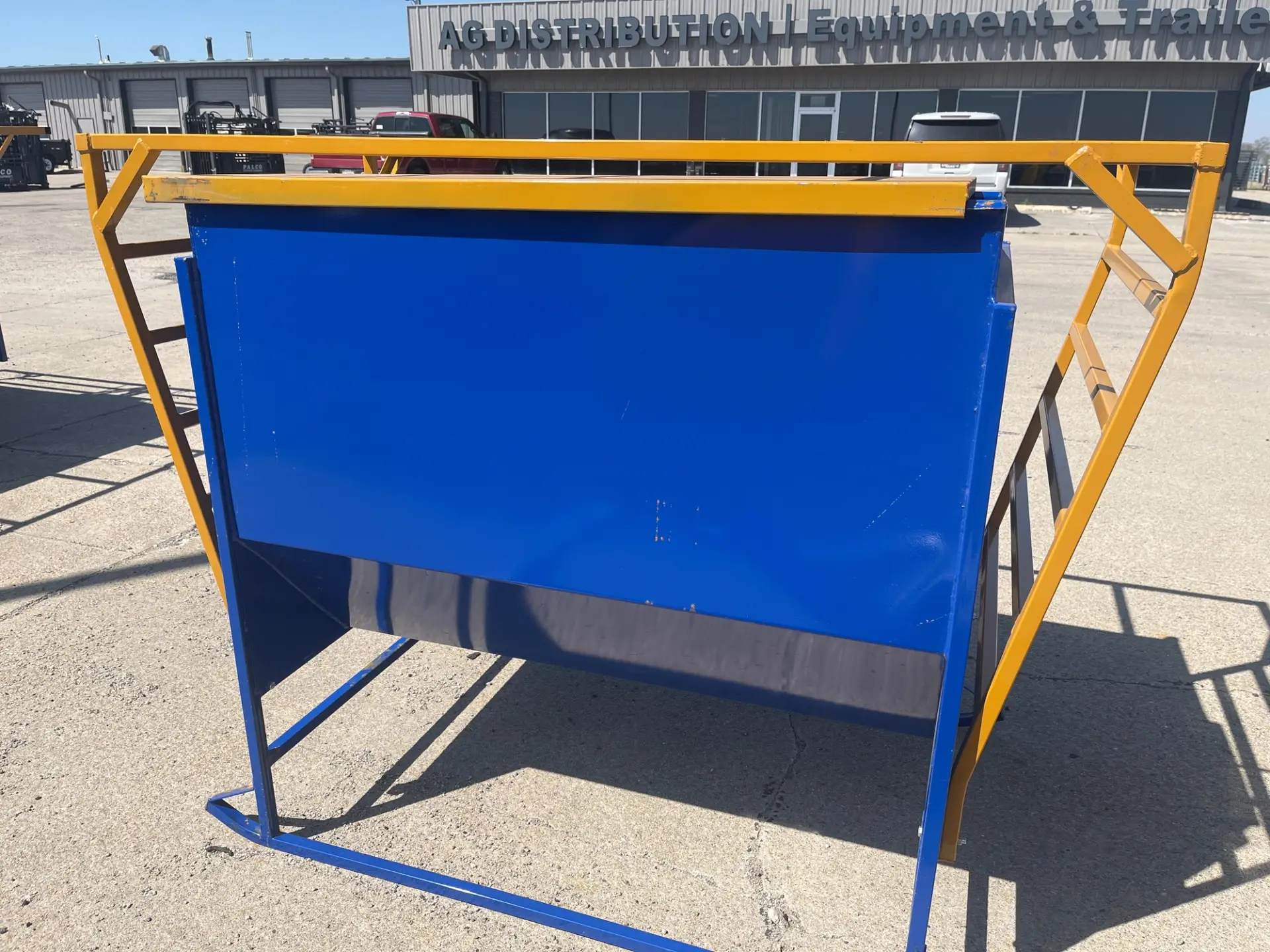
Stationary hay feeders serve operations where hay is fed in fixed locations rather than being moved with the feeding wagon or tractor on a daily delivery route. Feed yards, sacrifice paddocks, and designated feeding areas where soil disturbance from daily equipment movement is a concern all benefit from stationary feeders that stay in place throughout the feeding season.
Stationary feeders work well when the operation moves cattle to the feed rather than moving feed to the cattle. This approach concentrates manure and organic matter in the feeding area, which in rotational grazing systems is managed to benefit specific paddocks that receive the fertility input. The concentrated fertility application from a stationary feeding area, used deliberately as part of a rotational system, turns a waste management challenge into a soil improvement tool.
The size and capacity of a stationary hay feeder should match the size of the group being fed and the feeding frequency. A feeder that is too small for the group creates competition that disadvantages smaller or lower-ranking animals. A feeder that is too large relative to the group holds hay longer than the cattle consume it, which increases weather exposure and potential quality loss for the material waiting to be eaten.
Range Feeders for Pasture Distribution
Hay feeding in large pastures during winter often requires getting feed to cattle that are distributed across significant acreage rather than concentrating them at a single feeding point. Range feeders and feeder wagons designed for pasture distribution allow hay to be delivered at multiple points across the pasture, which distributes manure deposition, reduces soil compaction at feeding areas, and allows lower-ranking cattle to access hay without being driven off by dominant animals.
Distributing hay across multiple feeding sites in a pasture requires equipment that can be moved efficiently from the hay storage area to the feeding locations with manageable labor. Hay trailers designed for round bale transport, equipped with the load capacity and unloading features that match the operation's bale size and feeding routine, make this distribution practical as a daily or every-other-day feeding operation rather than a logistical challenge.
Hay Trailers The Connection Between Storage and Feeder
The hay trailer is the piece of equipment that connects hay storage to the feeding system. Its capacity, maneuverability, unloading mechanism, and durability all affect how efficiently hay moves from stack to feeder to cattle.
Hay Trailer Capacity
Hay trailer capacity in terms of the number and size of bales it can carry determines how many trips are required to supply a feeding operation. A trailer that carries multiple large round bales per trip reduces the number of tractor trips during the feeding period, which matters for labor efficiency on operations where the daily feeding routine competes with other morning work.
Matching trailer capacity to daily feeding requirements reduces unnecessary trips without loading the trailer so heavily that unloading becomes difficult or that the tractor's capabilities are stressed.
Unloading Design
The unloading mechanism on a hay trailer affects how much effort is required at the feeding point and how precisely bales can be placed in feeders or at feeding stations. Bale spear trailers require the operator to use a loader or spear on a tractor to remove bales individually. Gravity-unload trailers allow bales to roll off the trailer at the feeding point, which can be faster for operations that feed multiple sites.
Feeder wagons, which combine transport and feeding functions in a single implement, deliver hay by unwrapping bales while moving through the pasture, distributing loose hay in a windrow that cattle consume from the ground. This method eliminates feeder hardware but increases waste compared to contained feeding systems. For operations that accept higher waste in exchange for faster feeding of large groups across large areas, feeder wagon distribution is an appropriate choice.
Construction Quality
Hay trailers operate in conditions that test material quality. Wet fields, frozen ground, mud, manure contact, and the repeated mechanical stress of loading and unloading heavy bales all work against inferior construction. Heavy-gauge steel construction with appropriate frame reinforcement at high-stress points defines hay trailers built for multi-season service versus those that develop fatigue problems in the first few years.
Apache Equipment's hay trailer line is built to the same heavy-gauge steel standards that define the company's livestock handling and feeding equipment, which means the trailer that moves hay from the stack to the feeder is built to match the durability of the system it serves.
Mineral Feeders: Completing the Feeding Program
A complete cattle feeding program during hay feeding season typically includes mineral supplementation alongside forage. Mineral feeders positioned near hay feeding sites or at separate locations in the pasture give cattle convenient access to mineral programs that support the nutritional gaps that hay feeding alone creates.
The connection between hay quality and mineral program design is real. High-quality, well-cured hay from productive pastures has different mineral profiles than drought-stressed hay, late-cut hay, or hay produced on mineral-deficient soils. Understanding the hay's nutritional profile, through forage testing if possible, allows the mineral program to be targeted at actual deficiencies rather than applying a generic program that may over-supplement some minerals while under-addressing others.
Mineral feeder placement relative to hay feeders, water sources, and shade influences how consistently cattle access the mineral program. Cattle that have to travel significantly farther to reach mineral than they travel to reach hay and water tend to have inconsistent mineral intake. Positioning mineral feeders as part of the complete feeding area layout improves utilization.
Putting the Feeding System Together
The most effective hay feeding systems are not assembled from independent equipment choices. They are designed as integrated systems where trailer capacity, feeder design, mineral feeder placement, and the overall feeding area layout work together to produce the lowest waste and the most consistent cattle performance.
An operation feeding 200 cows through a 100-day winter season has different system requirements than a 50-cow operation feeding for 60 days in a milder climate. The feeder capacity, trailer trips per week, mineral feeder count, and feeding area management all scale with the operation's specific parameters.
Apache Equipment's dealer network provides the product knowledge and application experience to discuss your specific operation and recommend the equipment configuration that fits it. Finding the dealer closest to your operation through the dealer locator at apacheequipment.com connects you with local support for the equipment decisions that affect every winter feeding season.
Continue Reading
More from the Apache blog
 Equipment
Water Systems for Cattle Operations Tanks, Waterers, and What Actually Works
Feed programs get most of the planning attention on a cattle operation, and water access often gets treated as an afterthought, something assumed to be handled until a tank freezes solid, a float valve fails, or cattle start bunching up around a single water point and tearing up the ground around it.
 Equipment
How to Choose the Right Livestock Trailer for Your Ranch
A trailer is one of the most used pieces of equipment on any cattle operation, and also one of the easiest to under-buy.